Chains keep us together...
This is Peter’s stone near Wardlow Mires in the Peak district, looks like just an interesting geographical feature right? perhaps if I give it it’s other name, that of the gibbet stone you may realise it has a bit of a dark past.
Gibbeting was the somewhat gruesome practice of hanging a person in chains, many times after they had already been hanged by a noose and executed. The Murder Act 1751 specified that murderers’ bodies were either dissected or gibbeted – women were never hanged in chains, firstly because of well…decorum but also because their bodies were really sought after by anatomists.
The whole point of gibbeting was to discourage others from committing the same crime which was why the gibbet post tended to be placed near to where the crime was committed.
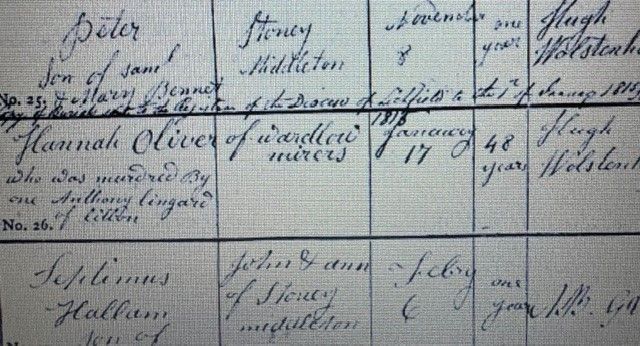
Take Anthony Lingard, in mid-January 1815 the 24 year old murdered toll keeper 48 year old widow, Hannah Oliver, taking both money and some footwear of hers as his spoils. It was when he gave some of the cash and the shoes to a local girl who he had seduced and got pregnant that it began to go wrong as she refused the gift having been aware of a local rumour as to what had been taken from poor Hannah. He was not actually being generous towards the future mother of his child; he was trying to bribe her to point the finger at someone else having got her in the family way…
It did not take long for Lingard to admit to his guilt and he was held at Derby Gaol until the Lent assizes in the March of that same year. His execution took place just days later on the 28th March 1815 from where he was removed back to the Mires and hanged in chains until his remains were so disgusting it was cut down around eleven years later.
As with so many local stories, there are variations on why Lingard was visiting Hannah, one was that he was trying to persuade her to marry him as he knew she had money on her – running a tollgate was a lucrative business…another was that it was purely opportunistic as he was local and knew the traffic that passed by would have meant rich pickings
There is not much on the victim that one can find which does seem to be the way with these kinds of murders, especially when it is a woman. I believe that Hannah married Richard Oliver in 1813, he was a widowed and quite a bit older than her, he passed away less than a year later. Hannah was buried a couple of days after her murder in Stoney Middleton.
Whether gibbeting was worth the expense (well into the thousands of £ in modern day money) in dissuading people from committing crimes is something historians have debated for years, bit like the horror of knowing your family member was being dissected as opposed to buried “whole”, but the practice was abolished in 1834.
I stood there on a nice summers’ day, obviously knowing what the area had seen, a highwayman by the name of Black Harry was also executed there, he was not just displayed there, according to records he was hung drawn and quartered first and I genuinely felt a real sense of unease.
All I will say is that if you are in this area, and you hear the galloping of hooves or the clank of chains? Keep walking.