
Mothers Friend
Penny Griffiths Morgan • 29 July 2020
On the 30th March 1896, a bargeman on the Thames noticed a package floating in the water and attempted to hook and retrieve it. Upon opening it he found it contained the body of a baby girl, who had white tape tied tightly around her throat and she was later to be identified as Helena Fry.
This was to be the catalyst of discovery of possibly the worst ever serial child killer in history, Amelia Dyer.
I wrote about this “woman” (I struggle to use that term) in my first book My Haunted History as I believe she may have talked to me through a device known as a PSB-7 (aka Spiritbox), obviously with a lot of things I will never know for sure, but the conversation certainly did provide details about her killings that I had not known at the time and only verified after.
Dyer was one of the women known as baby farmers, and they were an unfortunate bi-product of the Victorian time in which they evolved. Back in the 19th century, having a child out of wedlock was seen to be as bad a sin as murder by the incredibly upright, moralistic and god fearing hierarchy, couple that with the changes to the poor laws that saw fathers of illegitimate children having no responsibility to provide for their offspring and many new mothers had no option but to get rid of their new babies. Some would find the money to pay for child care during the day when they went to work, some would enter the workhouse and just take the disgust that they were targeted with, but many would pay a baby farmer to take the child. The fees for these services were not cheap; Dyer herself is reported to have charged between £5 and £10 for each youngster, roughly £600 to £1,200 in today’s money.
In theory, a mother was able to come back and reclaim her child, but sadly many did not, which left Dyer with a dilemma, to earn more money, she needed more infants but there was a limit as to how many she could care for realistically. It was actually another woman who introduced her to something called “Godfreys Cordial”; this was an elixir for children (also known as Mothers Friend) that contained amongst other things, Opium. It was designed to keep children quiet, after all, the Victorians were the masters of children should be seen and not heard, but the actual Opium in it had another effect, it rid them of an appetite, which meant Dyer could quite feasibly starve a child to death without raising an ounce of suspicion.
When a Doctor did become suspicious, Dyer had a foolproof plan of either moving to a new town using one of her many aliases, Hobley, Thomas and Harding being just three of the names she would use. Her other escape route was to declare insanity and be taken into the local asylum. This is not so strange to believe as during her formative years she was the main carer for her mentally ill mother, and a cursory glance of the newspapers from the 1880s and I found a piece about Amelia Dyer having been pulled from the water after a suicide attempt in the Western Daily Press in Bristol, which makes me wonder if that was following a murder.
As I started this piece, it was in March 1896 that the net began to close on Dyer, even with incredibly rudimentary forensics, the name of Mrs Thomas was discovered on the paper packaging that had wrapped little Helena and the police lay a trap to ensnare her.
When she went to the Old Bailey a few months later, it was actually for a different child she was tried, that of Doris Marmon, as her mother Evelina had reluctantly handed over the care of her newborn daughter. When dredging the river upon discovery of poor Helena, they discovered more bodies with the trademark dressmakers tape still tied in a bow around the infants necks, it was then they discovered little Doris.
It took the jury less than five minutes to find Dyer guilty, she was hanged at Newgate Prison on 10th June 1896, but sadly no one really knows the true extent of her murderous and insidious crimes, upwards of one hundred child disappearances are attributed to her, and some believe many more.
Read about my possible encounter with the Ogress of Reading in my book “My Haunted History” available on Amazon.

Most people with general knowledge can name famous aviators from the second world war, but what about those who went before them, what about the pioneers of military flight, the first world war aces? The Red baron, Albert Ball maybe? Billy Bishop? George Guyenmer? But when you look into the lists of pilots who achieved the notoriety of an ace, you will see they come from across the globe, however there is only one Greek person, Aristeidis Maraitinis Greece did not join the First world war until 1917, but Aristeidis had been in the Hellenic Navy since 1910 as an ensign and had volunteered for the brand new air arm of the force a few years later. It could even be quite easily argued he was part of the first ever aerial naval military operation when on 5 th February 1913, as an observer, he and his pilot conducted reconnaissance on an Ottoman naval base and also dropped bombs on an area in the Dardanelles. He must have got the flying bug because on the 22 nd September 1914 he went solo and achieved his pilots’ certificate, number 1087. In 1914, he and another Greek pilot, Dimitrios Kamberos took the initiative to form the first ever Greek Naval air force academy – he also co- founded the first Greek aircraft factory as well. They specialised in sea planes at their school as even though Greece itself is a very large land mass, it is full of smaller islands and there was a need for both observation and protection of shipping from the looming Ottoman threat. After Greece joined the triple entente and declared war on the central powers on 29 th June 1917, Aristeidis was working with the British Navy, flying Sopwirth Camels and over a period of fourteen months, was engaged in multiple dogfights and at the end of the war, was credited with nine aerial victories, making him Greece’s only flying ace of World War 1. It does seem to be the fate of quite a few well known aviators that flying an aircraft they were unfamiliar with was to be the end of their story - I am thinking of one of my personal heroes, Guy Gibson here – but on the 22 nd December 1918, Maraitinis was flying from Thessaloniki to Athens, when his aircraft, a Brequet 14 which he had not many flying hours in, went down in bad weather near to the infamous Mount Olympus. Neither the wreckage of the plane nor his remains were ever located, the Ace of the Mediterranean was 27 years old.
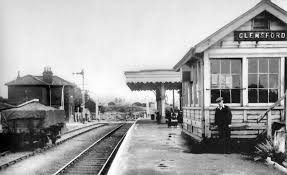
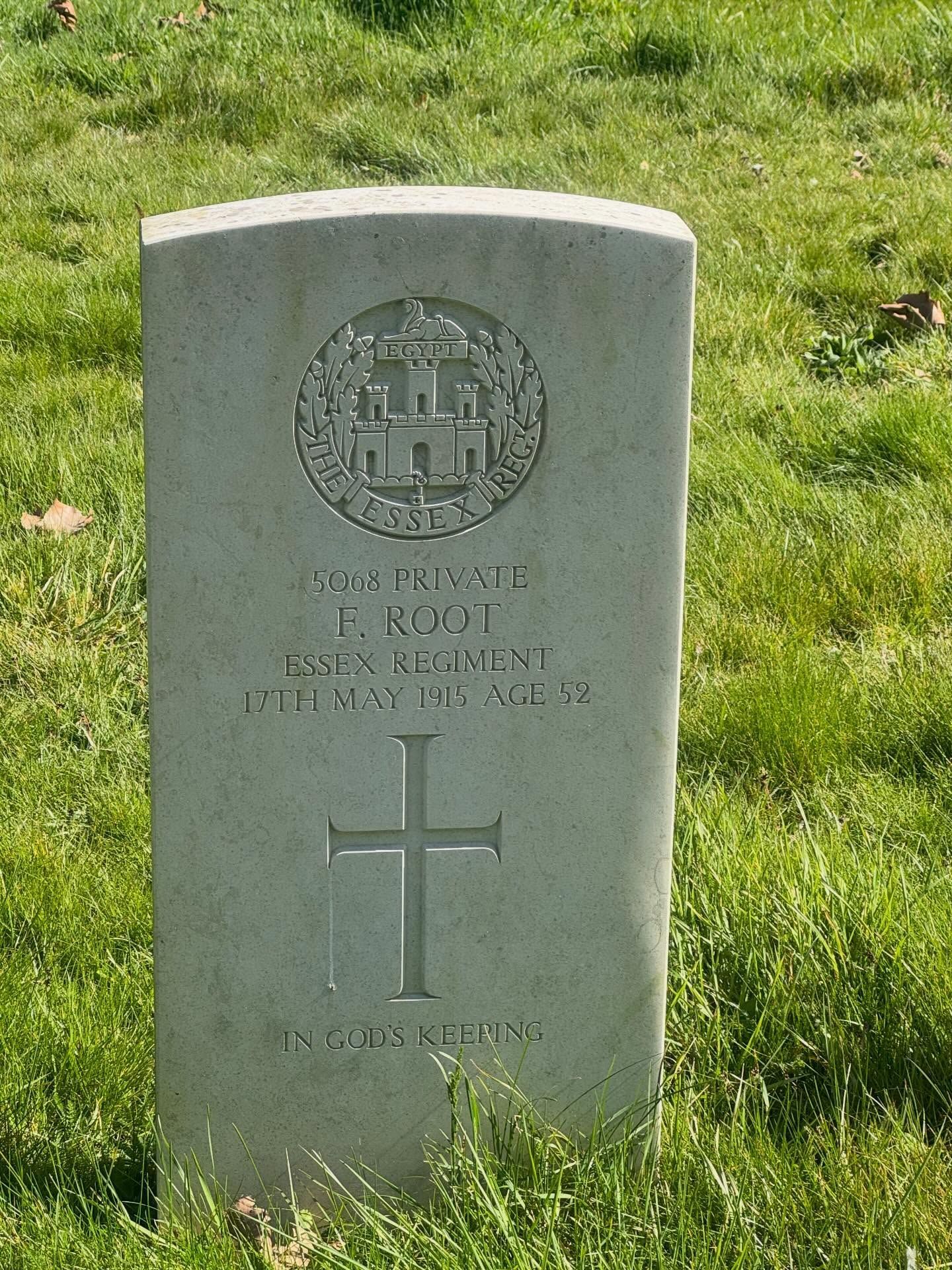
You may remember recently I wrote about some Commonwealth War Graves I had stumbled across in the cemetery in Chelmsford, there was one that I felt deserved his own blog as the death was very…questionable. The gravestone for Private F Root does not tell you what exactly happened to him, but for those of you with an enquiring mind, I do wonder why there was not more of an investigation into his death. As with so many Great War documents, there are fundamental gaps in the records when you go searching on line, so Fredericks papers are very scant and still leaves me with many things I cannot find answers for. Thomas Frederick Root was from Essex originally, and had joined the 2/6 th Essex battalion, essentially a home defence territorial force who were formed in November 1914 to protect and undertake duties required back in Essex. It appears that his responsibility was to perform sentry duties at Chelmsford railway station, and he was living in digs locally. On Sunday 16 th May 1915, Frederick turned up at the station and spoke with Sergeant Turner to explain that as it was 11pm, he did not want to go back to his billet and potentially disrupt his landlady so could he do a night duty then instead of the Monday night he was rostered for. This actually worked out quite well for Turner as half an hour earlier a drunk soldier had been arrested as “not altogether sober” by the commanding officer Major Evans which had left Turner a man down for that night’s shift. At midnight, Root went on duty at the viaduct end of the station, and two hours later, Sergeant Turner went to relieve him but he was no where to be found. It took a little while for him to find Fred, he was deceased and lying near to the rails. It was surmised that he had slipped, stumbled onto the tracks and been hit by a train from behind. Then the inquest began…the first accusation was that Root had been drunk and blame started to be placed on Turner for allowing him to work, he vehemently denied that fifty two year old Root was a drinker and maintained he was stone cold sober when he had asked to swap his duties at 11pm. The reason that doubt was cast on Root’s sobriety was a witness statement from PC Crabb who stated he spoke with the deceased at 11.30 pm – he was quite adamant about this as he had been asked the time - outside the station and that he could not walk straight so he presumed he was intoxicated. It was not difficult for the enquiries to find people to confirm he was sober. Why did PC Crabb’s evidence differ so much from Sergeant Turners? The Private who was also on duty had confirmed that the deceased had come into the guardroom at around 11pm and was certainly not inebriated then, but could not guarantee what had happened between their speaking and his shift commencement at midnight. Is it possible to become roaring drunk in thirty minutes? I guess so, but is it likely? No. What I find strange is that there is no mention of what trains would have come through the station during that two hour period in the reporting, nor are any train drivers called as witnesses. Also why was he in Chelmsford at 11pm at night ? he had apparently spent time that afternoon with one of his sons who was also a soldier – that poor guy had been the one to formally identify him, someone was obviously lying about whether Root was sober or not. His death was marked as accidental, not the first or last sad fatality to happen at Chelmsford, but I do have questions…
Recently I posted some Commonwealth War Graves that I found whilst walking around Chelmsford cemetery, I say “found” but obviously they were not lost…I would have said stumbled across but even that would be inaccurate so found it is. When you see war graves from the First World War in the UK you know that the person did not lose their life in the trenches, you may wonder how I know this? well, in March 1915, the British government banned the exhumation and repatriation of “Imperial” soldiers - originally the Commonwealth war graves commission was called the Imperial War graves commission. Whilst this move may seem harsh, the sheer number of deceased and also the health risk of trying to bring them back to the UK (or wherever they were from) was prohibitive, so the rule was upheld. It was not just for sanitary reasons however, there was also an element of equality as well. To put it in plain terms, the family of an officer were far more likely to be able to afford the costs of exhuming that body, and having it shipped safely back to his home, the next of kin of tommy's? Less able…and one of the things that the powers that be strove to drive home was that everyone was equal when it came to war. Well, unless you were one of those senior commanders sitting in your ivory tower, miles behind the front line and very safe thank you very much. I digress. So, remember that if you see a WW1 war grave, it is virtually definite that they passed on home soil, that does not mean they did not see action, nor does it mean they were not injured abroad as they could have been given a “blighty pass” (the ticket home to be treated) but they left this world on this side of the channel. On that note, the five WW1 graves I saw, what happened to them? I was waiting slightly to write this as the cause of twelve deaths in Chelmsford in the 1915 period amongst soldiers was meningitis. Henry Edmondson was born in 1896, in the city of Bristol, he had joined the army at 16 and was a member of the South Midlands Field Ambulance service who in the early years of the war had been billeted in Chelmsford. He had been working as an orderly at Oaklands military hospital (the site of the Chelmsford museum now) and even though as a means to try and control the outbreak they had moved a lot of people away from that site, he was to contract the illness and die after around a week at the same hospital where he had originally been working. William Bruton from Worcester was also to lose his life from the condition, just two days before Henry on the 17 th February 1915 at the age of 17 – although his records say he was 19 so it may have been he exaggerated his age when he signed up. The case of William Pilbrow, born in Northampton, he was also part of the South midlands division although this time the Howitzer brigade. This gunner was 19 when this happened to him, and by the looks of his records, he had been toying with the military since around 1911 when the census records show him as living in the Northamptonshire depot regiment building on Leicester Road. On the 10 th June 1915 he was being escorted to the Chelmsford & Essex Hospital on New London Road for an operation on a cut wrist, he had actually been detained by the military police so you do wonder what had happened to him. On the day in question he was told not to eat anything as he was going to be having a general anaesthetic so that his wrist could be operated on, but it seems that Gunner Pilbrow may have thought this a joke, and when he was coming round from the anaesthetic began to vomit partially digested food. There was a full inquest into who was at fault for this, and it was decided that William had been told on multiple occasions to not eat anything, but maybe they should have asked him before he was put under, it was still found that no medical staff were to blame. The other sad story I will tell is that of Frederick Root, but you will have to wait for that one…
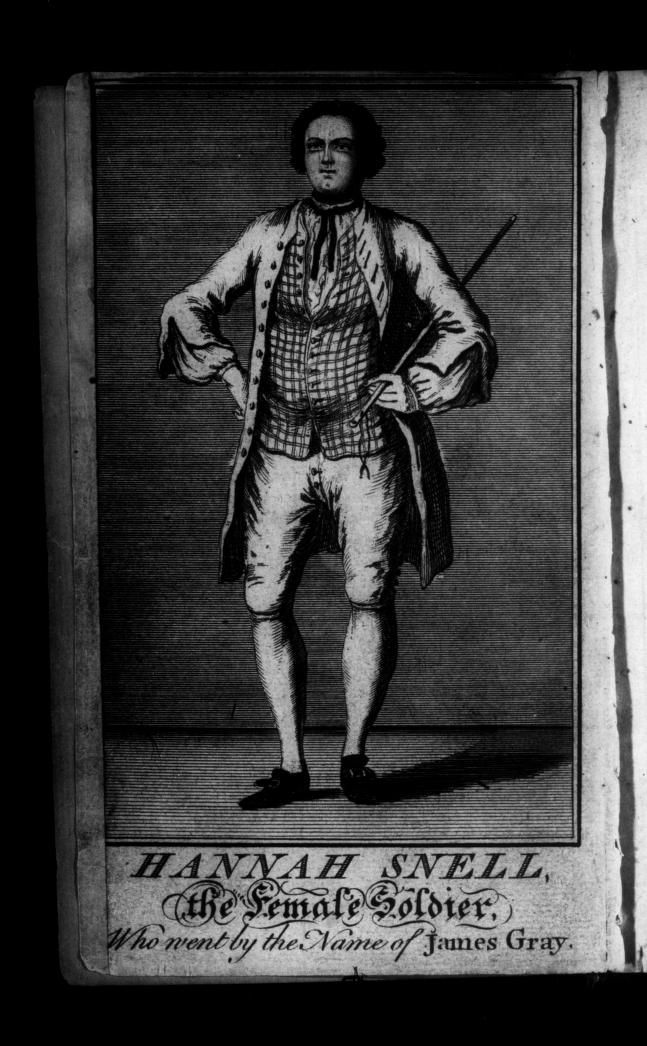
How often - for those of you that do research – do you stumble across information that you are not intentionally looking for but is just too good to ignore? That is indeed the case with the lady who I am going to talk about shortly, but I cannot do her amazing exploits justice in this short piece so please do read further if you find her as fascinating as me. Whilst I was researching for a short video I placed on my social media accounts recently about the 19 th incarnation of the Bethlem Royal - I had to remove the post but will be redoing it - I noted the name of Hannah Snell, a woman who in 1791 was admitted to the Moorfields site of Bethlem (I so hate using the word Bedlam) and sadly died there, she was buried in the graveyard of the Royal Hospital at Chelsea, but why? Sit back, grab a beverage and read on… Born in Worcester in 1723, Hannah was the youngest of eight and a few months before her twenty first birthday she married a Dutch sailor by the name of James Summs. This was not a match made in heaven, Summs was a blatant womaniser, and after blowing through what money they had living a lifestyle well beyond his means, he abandoned Hannah whilst she was pregnant with their daughter. Tragically Hannah was to lose her first child before they reached the age of twelve months, and she moved in with her sister in Wapping. With no real ties to anywhere she decided to travel to Coventry and find out what had happened to her arsehole of a husband, when she discovered he had been executed for murder (could not have happened to a nicer person I think) a plan must have formed in her mind. As a child she is said to have enjoyed “playing soldiers” and so she dressed in male clothing, assumed the identity of her brother in law James Gray and joined the 6 th Regiment of foot. According to the work “The Female Soldier” by Robert Walker, she excelled in training and nobody had any idea that was in fact a woman. Why exactly her superior, one Sergeant Davis decided that “James” would be the best person to aid him in gaining the trust of a young local woman who he had his eye on, so concerned with what his plans were for the girl, James/Hannah befriended her, Davis - with a somewhat one track mind – came to the conclusion that his soldier and the woman he had wanted were lovers and had Hannah sentenced to six hundred lashes outside the walls of Carlisle Castle. She received “only” five hundred, but even then her true identity was not revealed. After that, she did a runner from the army but instead of giving up on her military aspirations, she became a Royal Marine! To cut a quite long story short, she ended up fighting in the Siege of Pondicherry - having been transported there on the HMS Swallow – she was injured in a battle at Devicottah (now known as Theevukottai) which resulted in three months of recuperation, I say injured, according to her biography she was wounded twelve times. Even after being treated by regimental surgeons, her real identity remained secret. Hannah eventually returned to the UK in June 1750 where she came clean to her shipmates “ Why gentlemen, James Gray will cast off his skin like a snake and become a new creature. In a word, gentlemen, I am as much a woman as my mother ever was, and my real name is Hannah Snell” Now this is something that I find amazing, but somewhat satisfying as her friends encouraged her to not only publish her exploits but also to apply for a military pension…which she did, with the Royal Hospital Chelsea granting her a lifetime annuity in November 1750 You may wonder what happened after that? It seems Hannah settled down, married twice, had children but the end was to come to her amazing life when in February 1792, having spent six months in the Royal Bethlem after a period of mental illness, she died. Hannah Snell, the first ever female Royal Marine? Further reading - The Female Soldier – Robert Walker Hannah Snell – Matthew Stephens
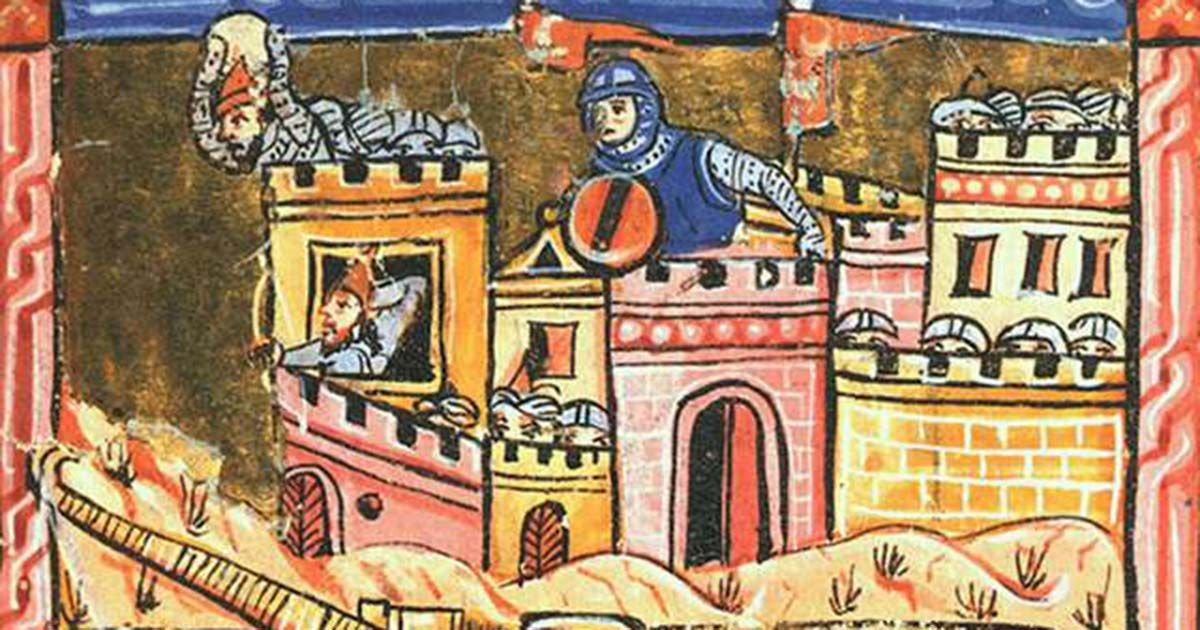
History has a tendency to repeat itself, antagonism towards certain groups of society can be seen through centuries of the past, and yes, it sadly is doomed to keep happening. Take the Jewish massacre in York in 1190 for example. Most people have either seen, visited or at least heard of Clifford’s Tower in the city. Originally constructed as a wooden keep by William the Conqueror (and therefore part of the castle), it was rebuilt in stone around 1245 or so but what happened to the original building? In the Middle Ages, it was against the Christian religion to lend money for interest, the religious teachings saw “usury” as being a sin, it was throwing the concept of charity and helping thy neighbour into the bin. The addition of interest payments on the loan was basically profiteering from another person’s misfortune and kicking them in the proverbial teeth whilst they were down. Not so in the Jewish faith, which meant that many became money lenders to Barons and other nobles who were desperate for funds to build their castles and such like. Those nobles included King Richard I who was in 1190, about to embark on another of his heavily leveraged crusades. As we have seen in more modern times, it is not difficult to incite unrest amongst crowds, especially when it is using a religion or way of life which they do not understand. Feeling this unease and being guaranteed royal protection, many of the Jews of York asked for help, and were granted cover in the timber tower that we know now as Clifford’s. Rumours had spread that the King had ordered a massacre of the Jewish population – not true, he actually defended them, as evidenced in London the year before– which would have been terrifying to those trying to live peacefully. Trust broke down between the Jewish community in the tower and the keeper, and when he left to run errands, they locked him out and refused his re-entry, barricading themselves inside and trying to fight off the ensuing hoard. The Chronicler of the time, William of Newburgh states in his work “Historia Rerum Anglicarum” that “ Nevertheless, they kept off the besiegers with stones alone, which they pulled out of the wall in the interior. The castle was actively besieged for several days; and at length engines were got ready and brought up” The Rabbi realised that the likelihood of them getting out unscathed was not probable, and made the request for the man of the family to kill his spouse and children, and then take his own life. The estimate is around one hundred and fifty perished, but that was not the end of it as some of the survivors set fire to their belongings which caused the wooden structure to catch light. Terrified of being burned alive, they begged to be allowed to leave peacefully if they promised to convert to Christianity. Again, William of Newburgh talks about this in his historical accounts and mentions Richard Malbeste who – “a most daring fellow, were unmoved by pity for these miserable wretches. They deceitfully addressed kind words to them, and promised the favour they hoped, under the testimony of their faith, in order that they might not fear to come forth; but, as soon as they came out, those cruel swordsmen seized them as enemies, and slaughtered them in the midst of their continual cries for the baptism of Christ”. To finish it off completely, the mob made their way to the Catholic cathedral and burned every record of Jewish lending - which had been deposited there for safe keeping – to release all from their debts. You may wonder how Richard the Lionheart viewed this? he was incensed, and sent his chancellor, the Bishop of Ely to York to punish the perpetrators. Possibly knowing that they would be incurring the wrath of the King, many of the leaders had done a runner to Scotland, so in the end financial punishments were imposed on the families, the amount dependent upon their personal fortunes. Nobody was ever tried for the murder of this, but that mound that the current tower sits on must be holding awful secrets from this tragic event.

My goal with most of my short posts on the various social media sites is to get people thinking, get those who think it looks interesting to investigate and research further, but recently I fell afoul of the participants who want to be spoon fed everything – either that or confuse my thirty second highlights to be akin to full blown hundred thousand word doctoral thesis. I had read about the events in Tunguska on the morning of 30 th June 1908 and decided to put a short piece together about it. By short I mean, a burst, literally…about one hundred words and a thirty second video, I know I talk fast but even I cannot cover every single possibility in that so I had to cherry pick the most likely reasons – and include Aliens because why not? So, I look at the comments and see one word…Tesla. Ok cryptic, does the person mean the electric car or the amazing inventor who ironically I had mentioned in a podcast only recently. When I question this person further I get told that I should have mentioned Nikola Tesla with regards to Tunguska as if I had done my research thoroughly I would have known. Rude. For those of you who enjoy reading and watching posts put together by people like me thank you, and of course I am always more than happy to learn about a subject as I do not profess to be an expert in any way on everything but there are ways to do it. When putting information together quite frequently one has to decide what is going in and what is staying out, with a situation like Tunguska there were other possibilities and the potential death ray created by Tesla was one. I had chosen to exclude it because I thought an alien spaceship exploding was actually more probable than someone creating a ray which could reach from Long Island to a remote area of Russia without actually destroying anything else in its path. I think Tesla was amazing and light years ahead of his time with his theories, but we know he was working on wireless energy transmission in 1908, his Wardenclyffe tower. All the programmes I have watched, the articles I have read (a couple of which are linked below) look at this invention as something to transmit globally wireless communications (and subsequently energy). We also know that the brilliant inventor was working on weapons with his telautomaton (wireless torpedos), and that he believed “Tesla said his transmitter could produce 100 million volts of pressure and currents up to 1000 amperes, with experimental power levels of billion or tens of billions of watts. If that amount of power were released in "an incomparably small interval of time," the energy would be equal to the explosion of millions of tons of TNT, that is, a multi-megaton explosion. Such a transmitter would be capable of projecting the force of a nuclear warhead by radio. Any location in the world could be vaporized at the speed of light." (taken from Frank Germano at http://www.frank.germano.com/tunguska.htm ) - I do want to stress that I could not find the original source for this passage as the website is no longer active (PGM) When the actual website dedicated to Tesla thinks its in the realms of ridiculousness that his tower at Long Island could have been the cause of the explosion, then I believe them. Granted I am not a scientist and even have to google some of the terminology to put it into “doesn’t have a scooby” type language, the probability that a weapon that powerful could have been created in 1908 is somewhat hysterical. To stress my point, according to various sites it was not until 1934 that Tesla started talking about death rays, in actual fact he called it a death beam as he said “I want to state explicitly that this invention of mine does not contemplate the use of any so-called " death rays." Rays are not applicable because they cannot be produced in requisite quantities and diminish rapidly in intensity with distance. All the energy of New York City (approximately two million horsepower) transformed into rays and projected twenty miles, could not kill a human being, because, according to a well known law of physics, it would disperse to such an extent as to be ineffectual” ( https://www.pbs.org/tesla/res/res_art11.html ) When I posted on my private profiles how annoyed I was at the “do your research” type comment, a good friend (who shall remain nameless) who does a role very similar to mine said she frequently got “you didn’t mention xyz…” and gave up explaining that even in a thirty minute video you cannot always cover the entire history of something. So, firstly no I did not mention Tesla because I thought it was grasping at conspiratorial straws and I thought the three other possibilities were more viable (based on the scientific reports I had read), can I cover every single variation of theory in a thirty second video? Nope but do I appreciate a private message saying “have you read about….” Rather than a snarky “do your research” type post? hell yes. https://teslasciencecenter.org/history/tower/ https://www.teslasociety.com/tunguska.htm
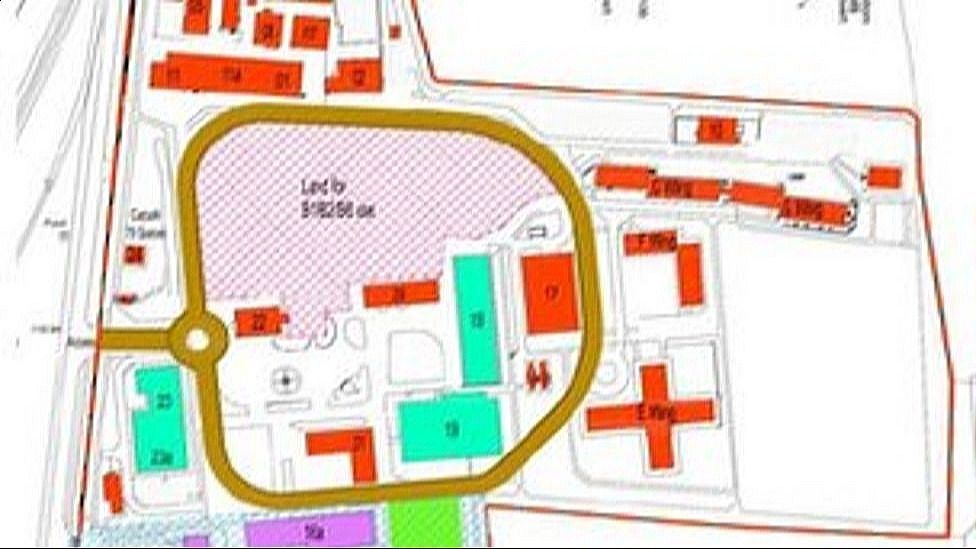
“Fancy spending some time in a prison Penny? Promise we will let you leave in the end” well if that is the case it would be mighty rude of me to say no would it not? So, on a very cold night in December, just before Christmas, I am being driven by the lovely Chris to Ashwell prison in Rutland (second smallest “county” in England I will have you know…) , accompanied by my ever loyal son, Helen and Emily, we were off on an adventure. We were going to be joining my awesome Haunted Happenings friends on an investigation of the site, I had come well prepared with my staple Haribo and also so many layers of clothes I felt like one of those old 1970’s toys the Weeble’s, I could not put my arms down by my sides and was walking in a wide legged stance, when I sat on the floor bending forwards (which I can normally do with ease) was impossible, made me laugh anyway. Plot spoiler, even with all my thermals, fleece lined tights etc I was still absolutely freezing, but I guess we do not do this for comfort. There are three buildings that you can investigate on this site, E, F and G wing. Whilst the main prison built in 1955 was a lot larger, it was originally a category D facility which meant dormitory style blocks as opposed to individual cells. In 1987 it was re-categorised as a C, and the accommodation was changed slightly. One of the alterations implemented was the erection of a seventeen foot high security fence that year, the powers that be stated that it was absolutely nothing to do with the sixty or so prisoners who had escaped in the past year and everything to do with the category changing. It was also nothing to do with the fact that many of the higher security prisons were overcrowded and that Ashwell was under capacity…am I a cynic? Yes I think I may be. Anyway, whatever the true reasons were, problems did start to happen, a small group of prisoners caused £10,000 worth of damage to computers and office equipment in 2003, but in April 2009 there was a major riot. At around 2am on the morning of Saturday 11 th , the inmates started causing trouble, it is said that it was triggered by a 22yr old prisoner who refused to go back to his room. Much of the older block (the non- cellular part) was seriously damaged, and many of the four hundred or so occupants of that part had to be moved to other prisons whilst the Home secretary decided whether to fund the repairs or not. Before it was a prison, the site had been used by the US Army for a short while to train parachutists, ostensibly to replace those lost during the D Day landings, it was there from June 1944 to October of the same year. The Army having also been using nearby RAF Cottesmore from September 1943. What sort of experiences did we have whilst there? My son and I based ourselves in block E, the “cross” shaped building on the map. It still had some original cells as most have been altered to allow for the airsoft brigade who use the site on a regular basis, and we both felt that it had the best energy for us. Quite early on we were hearing noises in the cells, the wooden beds creaking as though someone was either turning or sitting on them, plus whilst stood outside in the corridor we saw the light coming through the window slightly obscured, had someone walked past it? It still did not feel ominous or that it wished us any harm whatsoever, in fact whatever was interacting with us had a cracking – if not slightly perverted – sense of humour as when I asked what they were doing for Christmas it replied with ; “myself” Now those of a nervous disposition who do not have a dirty sense of humour might be shocked, but I am neither and it made me absolutely cackle with laughter. That is not to say it was all fun and games, on a subsequent visit to the same floor where we had been having a good laugh with the spirits, something slightly darker had decided to pay a visit. Whilst my son is getting pretty experienced at what he does, I am still protective over him and when I could see that something was trying to unduly influence him (I posed the question, and he gave the most guttural grunt I have ever heard) angry Mumma bear stepped in and pulled him out of the situation. We went back down to the base room and he said that he could still feel the negativity and he did not like it one bit. I may have let rip slightly at this entity and told it to quite simply f**k off back to where it had come from. Now you may think that my dropping f bombs were just me being me, and yes it was to an extent, but it had also used that word to me when I was trying to communicate so I figured it was language it would understand. I then gave my son my obsidian necklace to wear, he told me the next day that as he was doing it up, he felt something tugging at it as though to remove it. Mother and son 1, nasty arsehole of a spirit 0 The experience finished with those remaining (around ten or so) doing some Estes work, that was quite productive and gave some interesting results – including me saying my name and then ready when Michael the team leader asked the spirit to say who had the headphones on. I love it when that happens. There are plenty of groups who visit Ashwell Prison, and whilst it has not the incarceration history of somewhere like Shepton Mallet, it definitely still has resident prisoners who want to interact. Check out www.hauntedhappenings.co.uk for more info.

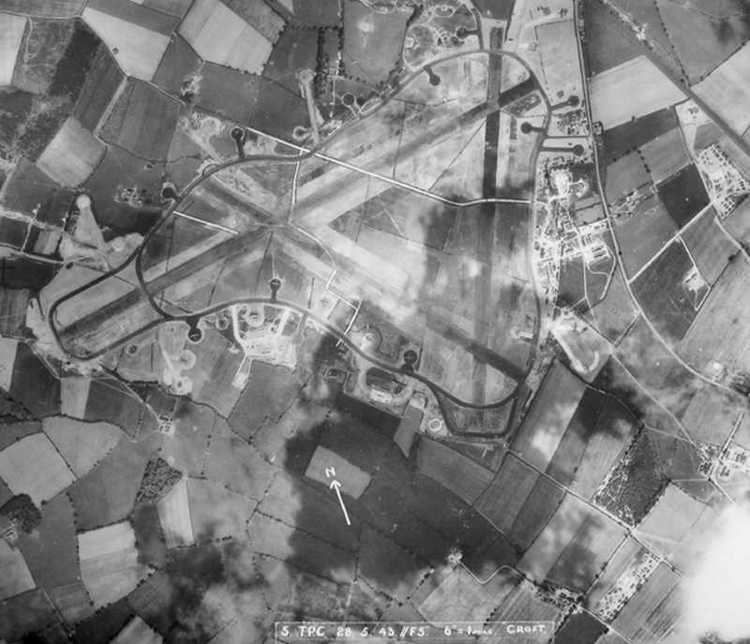
I am always on the look out for an interesting story to share with you all, and once I decide on a theme, old newspapers are frequently a good place to start – and this is one of those such discoveries. As many of you know, I am a total sucker for early 20 th century aviation, but sadly a large number of the accounts do not have a happy ending to them but that does not mean we should not share them I feel. The Hartlepool Northern Daily Mail on the 28 th June 1957 reported that multiple people had seen a ghost on the Middleton St George RAF base and they firmly believed it was a pilot known as Squadron Leader McMullen. So, my research started… Middleton St George was predominantly a bomber base during the second World War, home to a variety of aircraft including Wellingtons, Lancasters and Halifax’s, pretty much the who’s who of WW2 heavy bombers, and knowing as we do the amount of fatalities that these crews were met with it is perhaps not surprising that such a large number seem to want to haunt their airfield. What of McMullen? Well, there is a clue as nearby is a street named McMullen Road, was this in homage to our supposed apparition? Yes is the answer. On the 13 th January 1945, Pilot Officer William McMullen of the Royal Canadian Airforce took off in his AVRO Lancaster KB793 from Middleton on a night cross country training exercise with a crew of seven in total. The take off was normal, as was the resulting three hour flight, but as the pilot started his descent from around ten thousand feet they noticed sparks coming out of the port outer engine (Lancasters had four engines in total). Despite turning the engine off, and feathering the prop to reduce drag, the pilot gave the order to bail out but he stayed in the aircraft to try and steer it away from the densely populated area of Darlington. His actions meant that by the time he was clear of the area and over Lingfield Farm, it was too late for him to escape and he died as the Lancaster crashed. He had started his flying on the 22 nd December 1941, achieving his “wings” on 6 th November 1942 and was in his early 30’s when he lost his life. Could it be Bill that is seen walking the runways and looking at the civilian aircraft that Middleton is now home to? I have no idea, but it is somewhat interesting that the unit he belonged to, the 428 was also known as the “ghost” squadron…
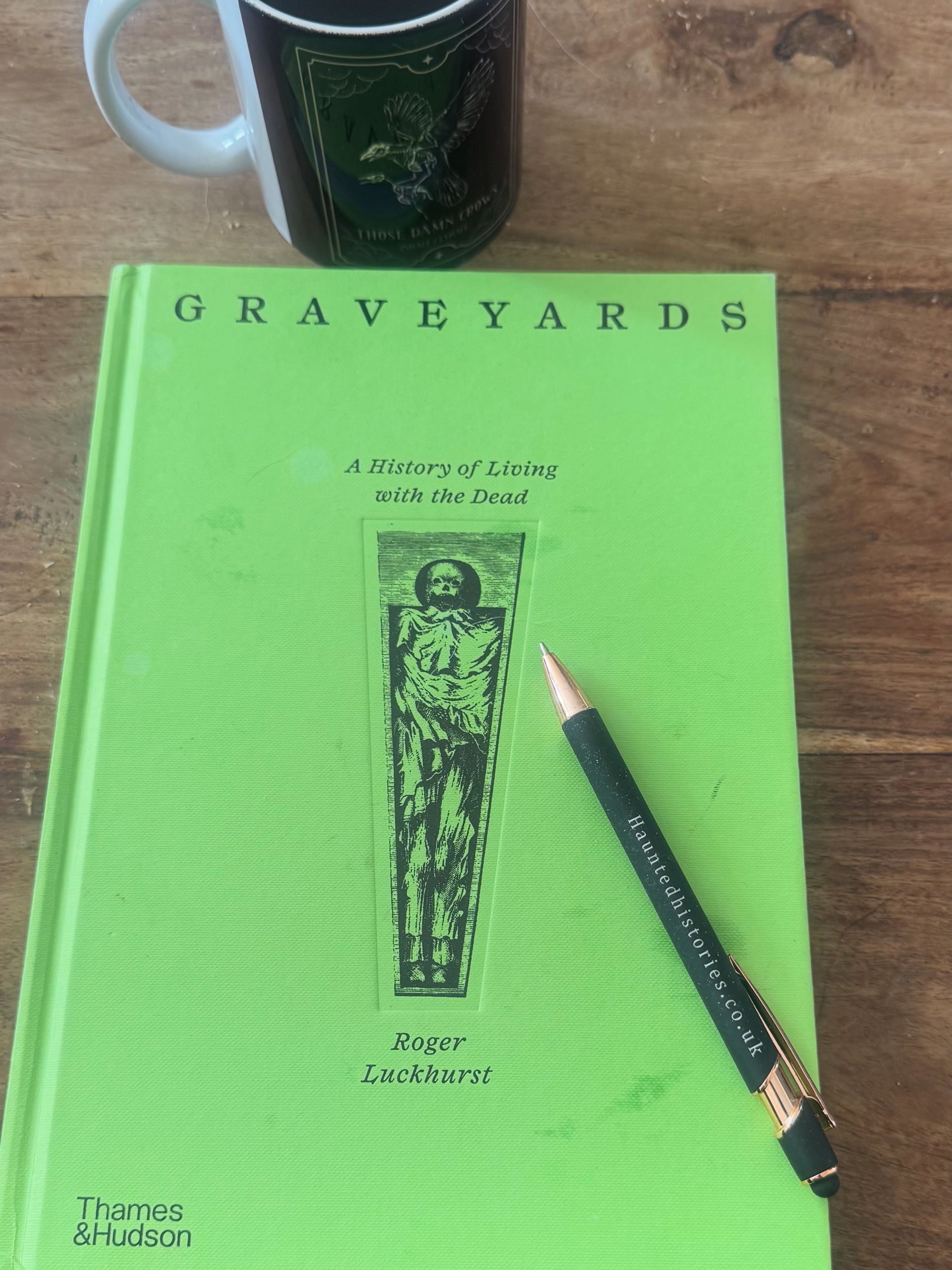
One of the coolest things that has happened since I have started to make a “name” for myself is that every so often I am asked to review a new tome that is coming out. For someone who is a self-confessed book worm, the opportunity to read pieces of work and comment on them is a dream quite literally come true. As a historian and a paranormal investigator, when the publisher Thames & Hudson asked me if I would like to read an advance copy of Professor Roger Luckhurst’s new book “Graveyards, a history of living with the dead” I positively jumped at the chance. I mentioned to my good friend Dr Kate Cherrell of Burials and Beyond that I was reading this and she was green with envy; she is the Queen of all thing’s death after all. Plot Spoiler, there was nothing I did not enjoy about this book so if you expect me to offer criticism, there is none, I have nothing but praise for this work. One of the early pieces of knowledge that Luckhurst gives us is that of Arnold van Gemep’s suggested three stage structure to all rites of passage, that being Separation, transition and incorporation. I am not going to explain what those mean, you can read the book and find out, but I do think that correlated nicely with the fact the work itself is split into three large sections, those being The Origins of Burial, Death and Faith and The Numberless Dead. What the author takes us on is not just a chronological but also an international journey through the different methods of dealing with the deceased, ranging from the obvious burial, cremation, mummification and even cannibalism. For those with an interest in the slightly folklore aspect and spooky, there is something there for you too. I was very pleased to see the legend of Timur (also known as Tamerlane) mentioned as this is one that has fascinated me for years. There is some very evocative writing as well that helps you visualise the incident such as when he is discussing what the bigger cities were going to do about their literally overflowing graveyards and this description of an event in Paris in relation to the Holy Innocents’ cemetery “…burst with the sodden weight of the dead. It released into the neighbouring streets a tsunami of bones and corpse wax - adipocere, the fat from human bodies. Nearby houses were inundated; some collapsed.” I mean pretty gruesome but it paints a very vivid picture of the problem that officials had, too many rotting bodies and not enough space. What I genuinely love about this book is that Luckhurst does not stay on one subject for too long and gives you just enough information to whet your appetite but leaves it up to you if you wish to do a deeper dive into that particular nugget or not. I find with some more academic driven pieces of work that they can labour on a specific point for far too long and you lose interest, not in this case. And for those who do not want to read too much, the pictures are pretty interesting too…